

Healthcare businesses are required to leverage their patient flow via their website and social channels. Otherwise, practices are leaving a large audience unattended.
Providers and practitioners can no longer rely on a single referral channel when more than half of their audience is searching for their services online.
Patients now search for their symptoms and explore services, read reviews, and compare multiple practices nearby. Now, for a healthcare practice, it is a hassle to deal with digital marketing strategies.
It can affect your patient focus and burden you with additional work. Another important flag is the compliance requirements. An expert digital marketing organization understands compliance risks in healthcare and strategizes every approach accordingly.
This guide covers how digital marketing works in healthcare, which channels matter, what to measure, and what to watch for on compliance.
| How Does Digital Marketing Help Healthcare Businesses?
Healthcare digital marketing helps US practices get found in local search, build trust through content and reviews, turn website visitors into booked appointments, and keep existing patients engaged. It works best as a connected system rather than a single tactic. Results vary by specialty, location, and competition, and no one can honestly guarantee rankings or patient volume. |
Why Do Healthcare Businesses Need Digital Marketing?
A patient registers a new symptom and wants to understand more. Their first approach is searching for relevant symptoms and conditions online. A new healthcare concern forces them to search for available consultants.
If you appear in the search, patients inquire about your experience, assess your knowledge, and compare your services with other practices online. What starts with a search query provides your practice with a patient flow channel. However, it can be a drawback if your presence is not updated with recent information, looks outdated, or fails to cover certain concerns in your area of expertise.
Healthcare Digital marketing also gives smaller practices a way to compete with large hospital systems. You can’t outspend them, but you can be more relevant, more local, and easier to book.
What is Local SEO and How It Helps Clinics Get Found?
Local SEO helps develop your practice’s high-intent search results. It includes setting up your Google Business Profile (GBP). Every time a patient searches for a relevant query, your profile is mentioned in the “near me” searches, increasing local audience coverage.
An optimized GBP includes your operating hours, category section, photos, and a direct link to book appointments.
In addition to that, optimizing for local SEO specifically targets relevant services that you offer in your local neighborhood and city. For example, a patient is more likely to search for a “pediatric dentist in London” rather than a generic “Pediatric Dentist”.
A few important elements to consider when setting up for local SEO can be as follows:
- Accurate Information on Health Topics
- Verified and Cited Information
- Reviewed or Approved by Qualified Professionals
Healthcare content falls in the stricter region of YMYL policy, combined with compliance risks. Google tends to hold such content to a higher standard since it can affect people’s well-being more directly.
Optimize your business with local SEO and other key SEO strategies to leverage your digital presence.
What Role Does Your Website Play in Patient Acquisition?
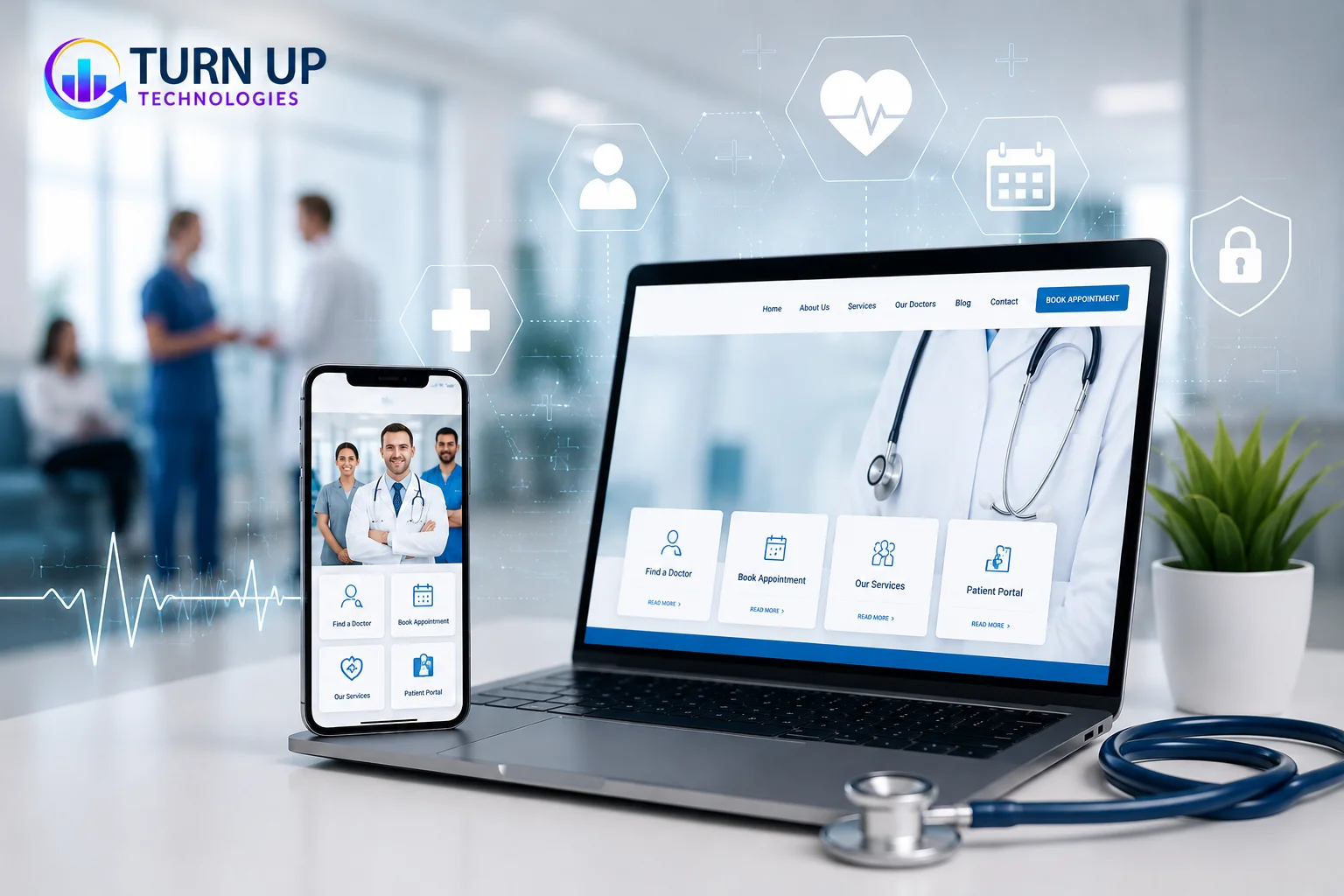
Your website is where interest becomes an appointment, or doesn’t. Marketing can send a patient to the site, but a slow, confusing, or hard-to-use page loses them.
Healthcare website design should prioritize:
- Fast mobile loading, since many patients search from their phones
- Clear services, locations, insurance information, and contact details
- Simple online booking or request forms
- Visible trust signals such as credentials, real staff photos, and reviews
Thoughtful UI/UX design is often what separates a site that merely looks professional from one that actually books patients.
Some practices need more than a brochure site, such as patient portals, intake flows, or scheduling tools. Those fall under web and mobile app development, and they should be planned with privacy in mind from the start.
Overall, a planned and strategic digital content strategy helps healthcare businesses drive results.
Which Digital Marketing Channels Work Best for Healthcare?
|
Channel |
Best used for |
What it delivers |
| Local SEO | Steady, long-term visibility | Lasting presence in local search |
| Paid search | High-intent services | Faster results |
| Social media and video | Showing your team and explaining procedures | Familiarity and trust with patients |
| Email and text reminders (with proper consent) | Existing patients and follow-ups | Fewer no-shows and returning patients |
As for 2026, practices are now moving forward with AI-powered tools for task automation. Several aspects of regular tasks, queries, and inquiries are now managed by such tools. This provides the front desk with time to cater to patient needs and improve other aspects of digital marketing.
If you want a team to plan and run this as one strategy, a full-service digital marketing and strategy partner can coordinate the pieces so they don’t work against each other.
How Do Online Reviews Affect Patient Trust?
- Online reviews on your Google Business Profile can make a real difference, because audiences trust positive reviews when comparing multiple options.
- Your website shows your expertise, authority certificates, and other credentials.
- A good or bad review gives patients a real-time, personalized opinion of your practice.
- Respond to positive reviews professionally, since they add authority to your service.
- Stay professional when responding to negative reviews as well.
- Keep the reviewer’s identity private, including whether they are a patient.
- Keep their health concern private too.
- Compliance authorities in healthcare take privacy very seriously
Partner Up With A Healthcare Digital Marketing Company
A digital marketing campaign works when it is designed to follow the patient’s path. A practice that is optimized well enough to get found locally, earn trust through content and reviews, remain easy to book, and be responsive is preferred.
Instead of relying on local referrals, your practice gets more traffic and is redirected to patients who are looking for the specific services that you provide.
If you want help building that system, Turn Up Technologies works with healthcare businesses on strategy, design, development, and performance-led marketing.
Book a consultation or request a free proposal to talk through your goals.
Frequently Asked Questions
Is digital marketing worth it for a small practice?
Often, yes. Local SEO, a strong Google Business Profile, and a well-built website can help a small practice compete in its area without a large budget. The right mix depends on your specialty, location, and goals.
How long does healthcare SEO take?
It typically takes months to see meaningful movement, though timing varies with competition, your starting point, and how consistently you publish and optimize. Paid ads can produce visibility faster, but they stop when the spend stops.
Can healthcare businesses run Google and Meta ads?
Generally yes, but both platforms restrict certain health-related targeting and claims. Policies change, so review the current rules for your service type before launching.
What does HIPAA-compliant marketing mean?
It means promoting your practice without improperly exposing protected health information. That includes how you handle patient data, review responses, forms, and tracking tools. Consult a compliance professional for your specific situation.